
Review · USA
Zipline Adventure through Tuscawilla Park
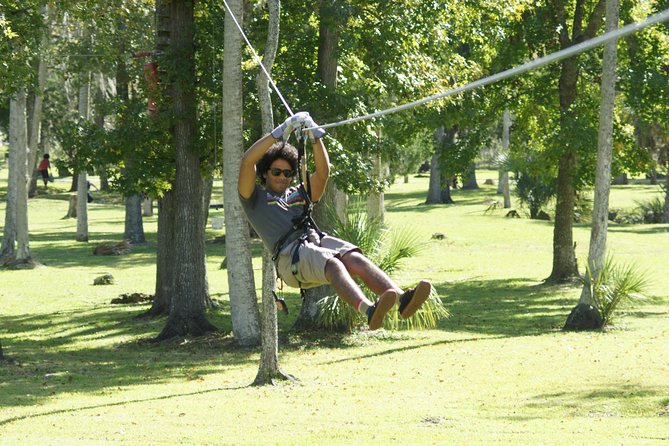
Daytona Beach Zipline Adventure is more than a quick flight between trees. You work through two full aerial obstacle courses, using swinging bridges, hanging logs, tight wires, and zip lines as you move from platform to platform. The second course reaches about 45 feet above the ground, with three zip lines stretching roughly 500 feet each.
I like the clear progression from a shorter 10-obstacle course to a much longer challenge, and I like the small-group format, which gives guides time to explain the safety system and help when you need it. The main drawback is physical: this is a ropes course with zip lines, not a gentle ride. Heights, awkward body positions, heat, and occasional waits can all affect your day.
Key points to know before booking
- Two courses, not just zip lines: You’ll tackle 10 obstacles and 4 zip lines on Course 1, then about 30 obstacles and 6 zip lines on Course 2.
- The second course gets serious: It reaches about 45 feet high and includes three zip lines of roughly 500 feet each.
- Expect a real workout: You may need to crouch, balance, pull, climb, and maneuver under cables while wearing a harness.
- Guides stay on the ground: Staff monitor your progress and can answer questions, but you must manage much of the course yourself.
- Morning can be a smart choice: The trees provide some shade, but the activity can feel hot, especially during a 2.5-hour session.
- Basic requirements matter: Everyone must be at least 54 inches tall and wear sneakers.
What the Daytona course is really like
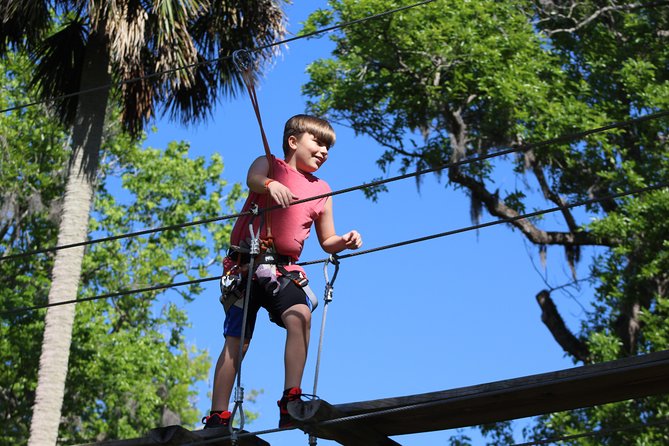
The name can make this sound like a simple zip-line ride. It is not. The zip lines are the reward between a series of physical obstacles, and the course asks you to use your whole body.
You might cross swinging bridges, step along hanging logs, balance on tight wires, and work through suspended elements before reaching the next platform. Some sections require you to get low under the cable or adopt an awkward seated position while connecting to the line. That detail matters if you have limited flexibility, poor balance, or trouble getting up from the ground.
The course sits in Tuscawilla Park, where the trees create a more natural setting than a tall tower or indoor adventure center. You are still in central Daytona Beach, but the activity feels removed from traffic and ordinary sightseeing once you are among the trees.
The experience has earned a 4.6 rating from 78 ratings, with 91 percent recommending it. That fits the overall picture: the strongest part is the combination of friendly instruction, varied obstacles, and a satisfying sense of progress. The weaker moments come when someone gets stuck, a line slows down, or a participant finds the height more difficult than expected.
More zipline tours around the USA:
- Koloa Zipline in Kauai
★ 5.0 · 6,764 reviews - Oahu’s North Shore: 8-Line Zipline Adventure
★ 5.0 · 3,616 reviews - 7-Line Zipline Experience in Sevierville
★ 5.0 · 2,872 reviews
Check-in, harness, and the safety lesson
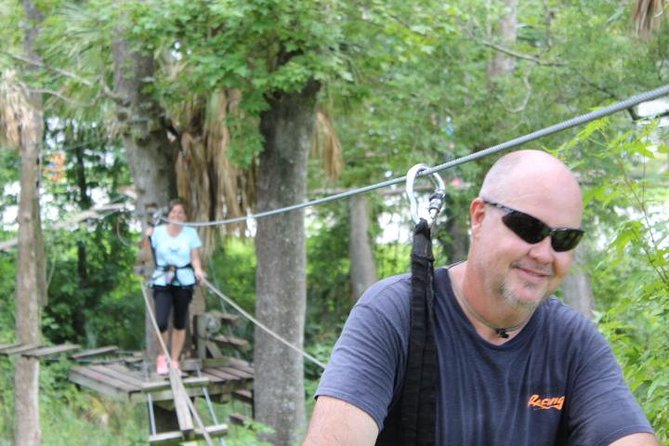
Your session begins at the harness house at 1000 Orange Avenue in Daytona Beach. You sign in, put on your harness, and move to a demonstration area for instruction.
This opening is not filler. The safety lesson teaches you how to move through the system before you are several feet above the ground. Pay close attention to how you connect, disconnect, and handle the equipment. Once you are on the course, you will need to repeat those steps as you progress from one obstacle to the next.
The staff stay on the ground rather than walking beside you on every platform. That arrangement gives you independence, but it also means you should ask questions during the demonstration if anything feels unclear. Guides including Skyla, Roger, Neil, and Carlos have been singled out for patience, calm encouragement, and clear explanations. Your assigned guide may differ, but that gives you a good sense of the support style to expect.
A small group helps here. The listed maximum is 25 people, though your actual course group may be smaller. If several people are moving slowly or need help, the pace can change. The staff monitor the activity, but they cannot remove every pause from a course that depends on people completing obstacles one at a time.
Course 1: a useful test at 15 to 30 feet
Course 1 begins at about 15 feet high and rises to roughly 30 feet. It has 10 obstacles and 4 zip lines, with the longest zip line measuring about 300 feet.
This first section works as both an introduction and a test. You get used to the height, the harness, the movement of the cables, and the need to plan your next step. The obstacles increase in difficulty, so you can find your rhythm before tackling the longer second course.
Do not assume the first course will feel easy just because it is shorter. Several people find the ropes work harder than expected, especially when balancing or reaching for the next connection point. One useful strategy is to keep moving at a steady pace instead of freezing at each obstacle. If you are nervous, take a breath, check your next attachment, and focus on the immediate task.
The first zip line can be the mental turning point. You may feel hesitant before launching, but the harness gives you secure support once you are moving. After that first flight, the rest often feels more manageable because you understand how the system works.
If heights make you uncomfortable, tell the guide early. You can still enjoy the activity, but you should allow yourself extra time and avoid treating other people’s pace as a deadline. One participant found the height too much after finishing Course 1, while others with a fear of heights became more comfortable as they continued.
The break between courses
After Course 1, you return to ground level for a short break before starting Course 2. This pause is useful. Your arms and legs may already feel the work, and a few minutes on the ground lets you reset before the longer challenge.
Bottled water and chips are available for sale. The supplied details also describe light refreshments and snacks after the activity, so check what is offered on your date rather than assuming food is included in the booking. Either way, bring your own water if you know you get thirsty during exercise.
Heat is worth planning for. The tree cover offers some protection from direct sun, but the activity can still feel hot. A morning booking may be more comfortable, especially in Daytona Beach. Wear clothes that allow you to move freely, though the firm requirement is sneakers and a minimum height of 54 inches.
Same harness, a different kind of thrill:
- 7-Line Maui Zipline on the North Shore
★ 4.5 · 1,648 reviews - Maui Zipline Eco Adventure: 8 Lines through the Jungle
★ 5.0 · 1,398 reviews - The EDGE: Zip Line Tour
★ 5.0 · 1,153 reviews - Big Island Zipline Tour Near Akaka Falls (250-ft Waterfall!)
★ 5.0 · 1,077 reviews
Course 2: the main challenge
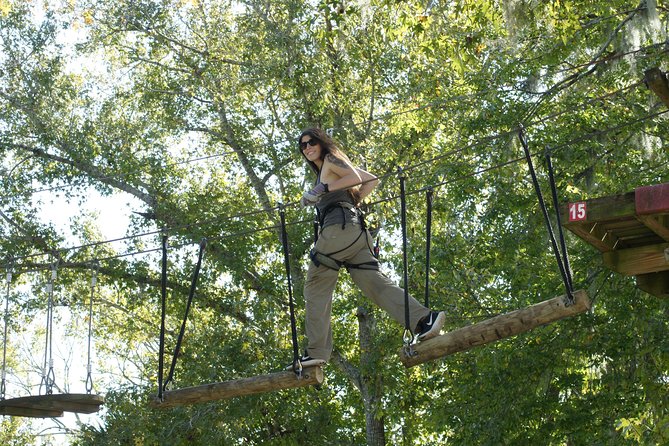
Course 2 begins at about 20 feet and climbs as high as 45 feet. It includes about 30 obstacles and 6 zip lines. Three of its longest zip lines run about 500 feet each, giving you a much longer flight than anything on Course 1.
This is where the activity shifts from a pleasant introduction to a serious physical challenge. You will spend more time balancing, stepping, pulling, and handling the safety equipment. The obstacle count is approximate, but the point is clear: Course 2 is much longer and more demanding.
I would not book the full experience expecting to sit back and glide through the trees. You need moderate physical fitness, and you should be comfortable with repeated movement at height. One person reported burning more than 400 calories during the activity, which gives you a useful idea of the effort involved, though your own exertion will depend on your pace and body size.
The course can also test your problem-solving skills. At some points, the difficult part is not the zip line itself but getting under a cable or lining up your body to reach the next connection. That is normal for this kind of aerial course, but it can surprise anyone who booked because they wanted a few easy flights.
What happens when someone gets stuck
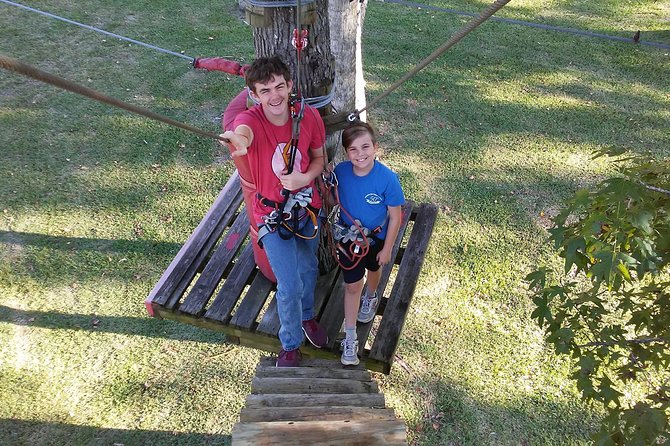
The activity depends on a steady flow. If one person stops in the middle of a zip line or struggles on an obstacle, the people behind may have to wait.
Most of the time, that pause may be brief. But limited staff coverage can become an issue when several people need help at once. A past session had participants stuck on two zip lines, which created a backup. Two staff members had to assist one person, leaving fewer people available elsewhere.
That does not make the course unsafe by itself, but it does show why patience matters. You may not move continuously for two and a half hours. A person ahead of you may be frightened, tired, or simply learning the system. If you are booking with children, understand that a slower child may be asked to let others pass, and that this can affect how much of the course your group completes.
The practical lesson is simple: allow the full approximate duration, avoid tight plans afterward, and accept that a ropes course has a human pace. The maximum group size of 25 is not the same as a private tour, so the experience can vary with the mix of ability and confidence in your session.
How the guides affect the experience
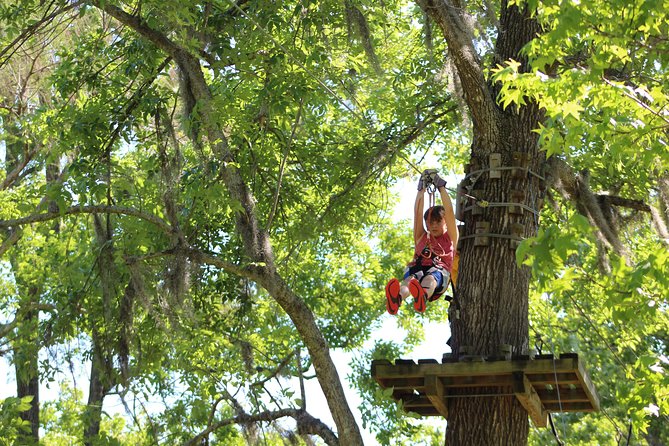
The guides do not carry you through the course, but their tone can make a large difference. Clear instructions matter most during the harness lesson and at the points where you must change from one obstacle to another.
Skyla was praised for working patiently with a parent and child, explaining each step and taking photos. Roger was described as calm and encouraging when the course proved harder than it looked. Neil helped two people who were nervous about heights by allowing them to move at their own pace. Carlos was credited with making the process feel comfortable and manageable.
Those examples point to the best use of the staff: ask for help before a small problem becomes a full stop. If you are unsure how to approach an obstacle, speak up. The ground staff monitor progress and answer questions, but they may be assisting someone else, so do not expect an instructor beside you at every platform.
The experience suits families especially well when adults set a relaxed tone. Children and teens often enjoy the challenge, but a child who is technically tall enough may still find the height or strength demands difficult. A 9-year-old and a 47-year-old parent completed the course together, while another adult chose to stop after the first section because of the height.
Who should book this activity
I would recommend it for active families, teens, couples, and friends who want a shared challenge rather than a passive attraction. It also works well for a birthday outing or a group looking for an activity outside the beach routine.
You are a good match if you:
- Meet the 54-inch height rule
- Can wear sneakers and move comfortably in a harness
- Have moderate physical fitness
- Are willing to climb, balance, crouch, and pull
- Can tolerate heights or are ready to work through some fear
- Have about 2.5 hours available
I would think twice if you want a short, easy zip-line ride. I would also be cautious if you have trouble with balance, kneeling, getting up from a seated position, or sustained physical effort. The course can be encouraging for someone nervous about heights, but it cannot remove the height itself.
Getting there and planning your day
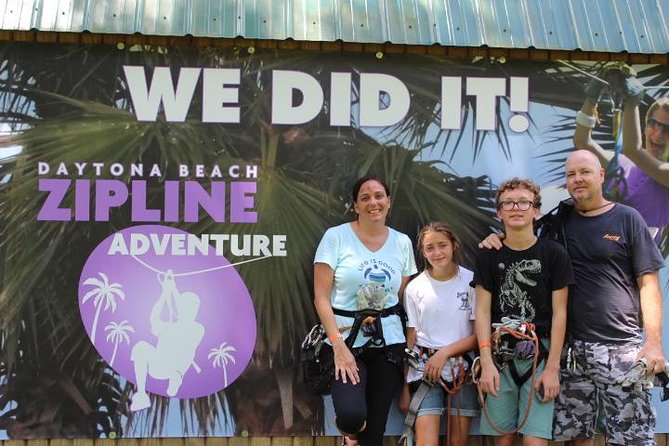
The meeting point is Daytona Beach Zipline Adventure by TreeTop Trekking at 1000 Orange Avenue, Daytona Beach, Florida 32114. The activity finishes back at the same point, and the location is near public transportation.
Mobile tickets make arrival simple, but you still need enough time to sign in and get fitted with a harness before the safety demonstration. Confirmation is provided when you book. Since the course can take about two and a half hours, add time for arrival, the short break, and any delays caused by the pace of the group.
Wear sneakers. This is not the place for sandals or loose footwear. Dress for warm outdoor activity, drink water, and consider a morning session if you are sensitive to heat. The park setting also gives you a reason to allow extra time before or after the course, but only the zipline activity itself is described here.
Cancellation is free if you cancel at least 24 hours before the start time. Changes or cancellations within 24 hours are not accepted for a refund, so check your schedule carefully before booking.
Is the experience good value?
No price is provided here, so I cannot judge the exact cost against other Daytona attractions. I can judge what you receive: roughly 2.5 hours, two courses, 10 zip lines in total, and about 40 obstacles across both sections.
That is a substantial activity rather than a quick add-on. The value is strongest if you complete both courses and enjoy physical challenges. You are paying for instruction, equipment, staff monitoring, and access to a course that takes real effort to finish.
Value drops if you are unsure about heights or fitness and may stop after Course 1. It can also feel less satisfying when long waits interrupt the session. Still, the combination of course variety, guide support, and the chance to work through a challenge with your family or friends gives the activity a clear purpose beyond taking a few photos.
Should you book Daytona Beach Zipline Adventure?
Book it if you want an active, hands-on outing and like the idea of earning each zip line by crossing obstacles first. Course 1 gives you a sensible introduction, while Course 2 supplies the longer flights and harder work that make the day memorable.
Prepare for heat, awkward positions, waiting, and the possibility that someone in your group may not finish. Wear sneakers, choose a morning time if possible, and tell the guide if heights make you nervous. With those expectations in place, this is a strong choice for families with older children, teens, and adults who want more than a quick ride through the trees.
FAQ
Where does the zipline adventure start?
It starts at Daytona Beach Zipline Adventure by TreeTop Trekking, at 1000 Orange Avenue, Daytona Beach, Florida 32114.
Where does the activity finish?
The activity ends back at the same meeting point.
How long does the experience take?
The complete activity takes approximately 2.5 hours, including check-in, harness fitting, the safety demonstration, both courses, and the break between them.
How tall must participants be?
Everyone must be at least 54 inches tall.
What should I wear?
You must wear sneakers. The activity also requires clothing suitable for physical movement and outdoor conditions.
How many zip lines are included?
Course 1 has 4 zip lines, and Course 2 has 6 zip lines, for about 10 zip lines in total.
How high do the courses go?
Course 1 reaches about 30 feet. Course 2 reaches about 45 feet.
Is the activity suitable for beginners?
Yes, the first course serves as an introduction, and the safety demonstration explains how to use the equipment. You still need moderate physical fitness and must be ready for heights and obstacles.
What is the cancellation policy?
You can cancel for a full refund up to 24 hours before the experience starts. Cancellations or changes made less than 24 hours before the start time are not accepted for a refund.
Fresh zipline picks around the USA
- Hakalau: 9-Line Zipline Adventure with Umauma Falls View★ 4.5 · 7 reviews
- Twin Falls: Zip Line Tour★ 4.1 · 8 reviews
- Tree Tops Zip Line Canopy Tour★ 5.0 · 32 reviews
- New River Gorge, WV – Zip Line Tour★ 5.0 · 7 reviews
- Zipline Canopy Tour- ArborTrek at Smugglers Notch Resort★ 5.0 · 9 reviews
- Wildman Zip Line Tour★ 5.0 · 10 reviews
- Zipline and Adventure Tower at Ryze Adventure in Missouri★ 5.0 · 4 reviews
- Zipline the Goliath in The Smoky Mountains★ 5.0 · 5 reviews
More USA Zipline Tours to compare.
Oahu’s North Shore: 8-Line Zipline Adventure
Read our review →
Maui Zipline Eco Adventure: 8 Lines through the Jungle
Read our review →
Big Island Zipline Tour Near Akaka Falls (250-ft Waterfall!)
Read our review →
Big Island: 9-Line Waterfall Zipline Experience
Read our review →Zipline lists with this tour