
Review · SPAIN
Elda: El Bolón via ferrata with zipline and abseiling
The main draw here is a three-part via ferrata on Sierra de Bolón, with K1, K3, and K2 sections linked into one compact mountain outing. You climb fixed metal rungs, cross hanging bridges, and finish with the advertised zipline and abseiling elements. It is a good way to try a vertical adventure without signing up for a full-day expedition.
I like the clear beginner-friendly start and the fact that helmet, harness, energy absorber, insurance, photos, and videos are included. I also like the mix of skills: this is not just a ladder climb. The possible drawback is that the zipline length is described inconsistently, as over 1,000 meters in one place and over 100 meters in another, so confirm the exact setup before booking.
Key points to know before you book
- Three linked grades: The route combines K1, K3, and K2 sections, so the difficulty changes as you go.
- A short approach: A roughly 10-minute walk takes you from the meeting point to the route.
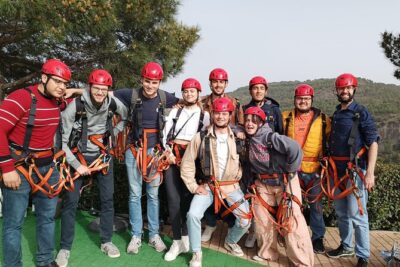
- A proper safety briefing: Guides explain the harness, helmet, and energy absorber before you clip onto the lifeline.
- More than vertical climbing: Expect a vertical wall, horizontal flanking, hanging bridges, and advertised abseiling.
- A question worth asking: Confirm whether the zipline is over 100 meters or over 1,000 meters, since both figures are given.
- Strong early feedback: Karen from the Netherlands called it challenging and very enjoyable, while Bartosz from Poland praised the organization and sense of safety during a trip with his son.
Starting at the foot of Sierra de Bolón
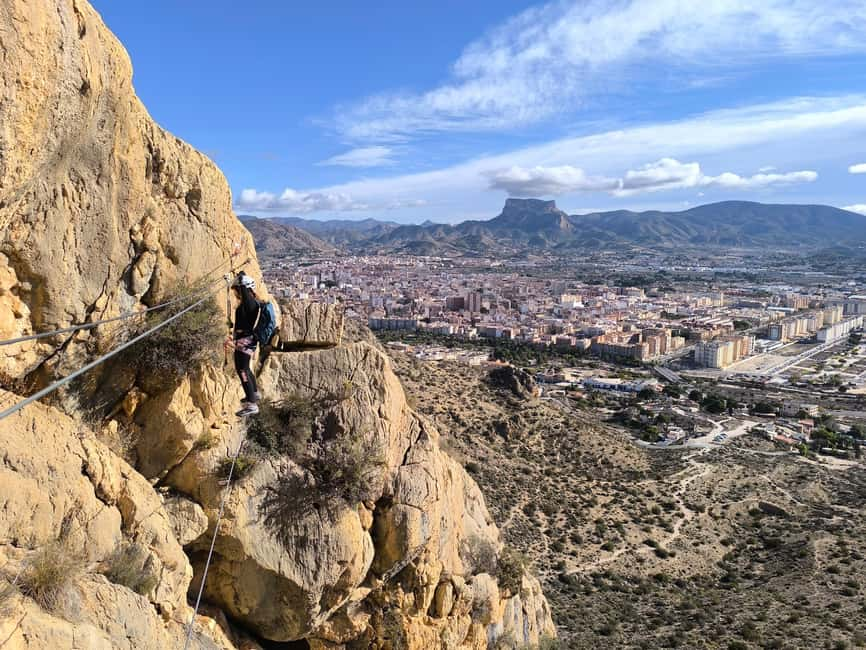
Your meeting point is at the foot of Sierra de Bolón, near Elda in the Valencian Community. The activity lasts about three hours, which makes it easy to fit into a day in the area without giving up the whole day to outdoor logistics.
The first stage is simple. You meet the Masaventuras team, receive your helmet, harness, and energy absorber, and get a clear explanation of how the equipment works. That matters. A via ferrata can look intimidating when you first see the steel cable and vertical rungs, but a calm briefing turns the gear into a practical system rather than a mystery.
You then walk for about 10 minutes to the start of the route. This is not a long approach, but wear proper shoes and comfortable clothes from the beginning. You will not want to make that walk in stiff clothing or footwear with poor grip.
The activity is offered with guides who can work in English, French, Catalan, Portuguese, and Spanish. That language range is useful during a safety briefing, where understanding how to move your carabiners and energy absorber matters more than casual conversation.
More Via Ferrata Climbs in Spain:
- Climbing + Zipline + Via Ferrata + Cave. Adventure route in Gran Canaria
★ 5.0 · 149 reviews - Agaete: Gran Canaria Coasteering. Marine Ferrata and Zipline
★ 5.0 · 38 reviews - Gran Canaria: Guided Via Ferrata and Zipline Adventure
★ 4.1 · 36 reviews
Learning the safety system before the climb
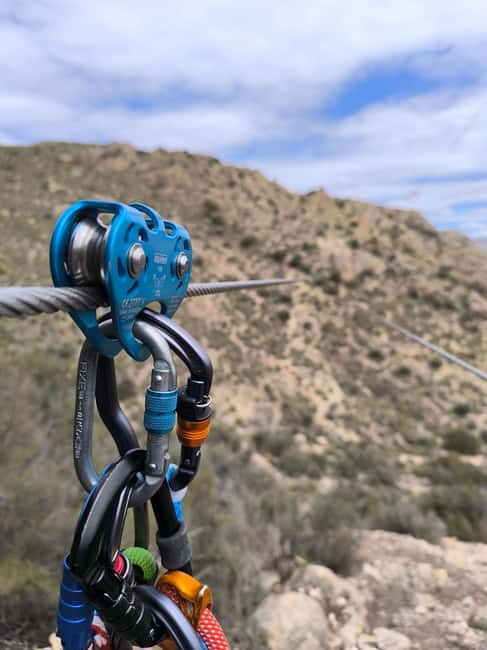
The key piece of equipment is the energy absorber, attached to your harness and used with the fixed lifeline. You clip into the cable and move along the route while staying connected. The guides explain the process before you begin, and the supplied information stresses that the method is clear and easy to learn.
You should pay close attention here, even if you have climbed before. The most important part is not simply attaching yourself to the line. It is understanding how to move safely from one section to the next and how to handle the carabiners without rushing.
This is also where the guided format earns its keep. At $53 per person, you are not only paying for access to a route. You are paying for instruction, equipment, professional supervision, civil liability insurance, accident insurance, and the photo and video package. If you do not own via ferrata gear, that bundle makes the price easier to justify.
The route is described as suitable for a group adventure, but no group size is provided. If you want a quieter outing or are traveling with a larger party, ask Masaventuras how many people are normally placed with one guide.
The first vertical wall, a confidence-building start
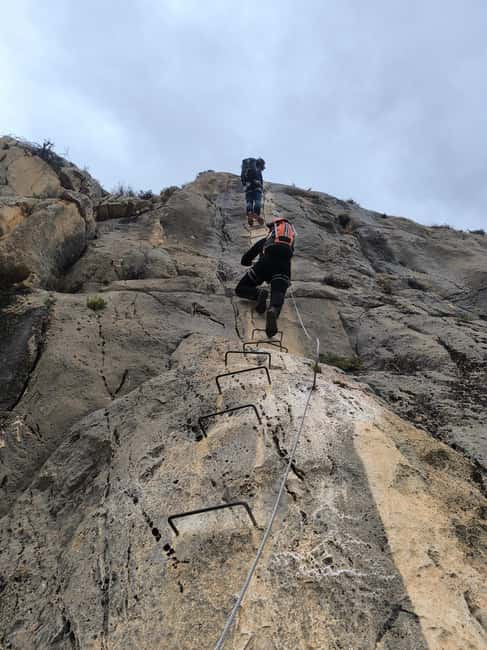
Once clipped to the lifeline, you begin with a vertical wall fitted with metal rungs. You climb rung by rung, gaining height while using the rock and the fixed equipment for support.
The first wall has an important job. It lets you learn the rhythm of via ferrata movement in a controlled setting. Place a foot, reach for the next handhold, check your position, and keep moving. You do not need to treat it like a race. A steady pace is more useful than strength alone.
The route uses grades K1, K3, and K2. K1 generally signals the easiest type of via ferrata terrain, while K3 is the more demanding section in this particular sequence. The grading is a useful warning that the route does not remain at one level from start to finish. You may feel comfortable at the opening and then need more focus on the K3 portion.
I would book this for someone who is active and curious about climbing, but not for a person who already knows they dislike exposure or heights. The activity is specifically not suitable for people with vertigo or altitude sickness. Pregnant women and children under five are also excluded.
The upper pause and the horizontal flanking section
After the first vertical wall, you reach a higher point and take a break. This pause gives you time to catch your breath and decide whether to continue onto the horizontal flanking section.
That choice is worth noting. It suggests the experience has some flexibility rather than forcing every participant through every feature at the same pace. The flanking section is described as a fun horizontal passage with a good perspective, so it adds a different kind of challenge. Instead of simply gaining height, you move across the rock face while staying attached to the lifeline.
For me, this is one of the more appealing parts of the route. A vertical wall tests your ability to climb upward. Horizontal movement tests balance, body position, and comfort with looking outward. It also gives you a broader view of the area than you get while focused on the next rung.
The supplied details do not state exactly how exposed this section feels, nor do they say whether every participant can skip it. Ask the guide on the day if you have concerns. That is better than guessing from the grade alone.
More Rappelling Runs in Spain:
- Selva Maya Eco Adventure Park: Ziplining, Hanging Bridges, Rappelling and Cenote
★ 5.0 · 1,057 reviews - Full-Day Zipline and Waterfall Rappelling Adventure Near San Juan
★ 5.0 · 889 reviews - Rio Secreto Plus: Classic Tour, Bycicle, Rappel & Ziplines
★ 4.5 · 365 reviews - Riviera Maya Jungle Half-Day Tour: ATV, Ziplines, Cenote Swim, Rappel
★ 4.5 · 339 reviews
Hanging bridges and the three changing grades
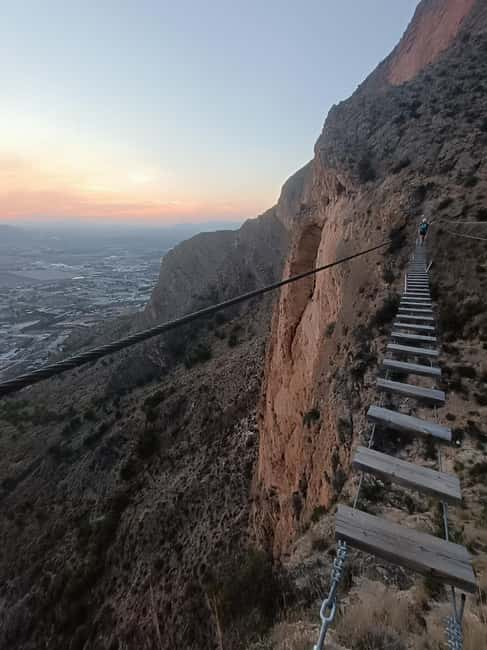
The route highlights hanging bridges and climbing walls, along with three connected via ferrata sections rated K1, K3, and K2. These features keep the outing varied. You are not repeating the same ladder climb for three hours.
A hanging bridge changes the movement again. The challenge comes from crossing rather than climbing, and the bridge can make the route feel more adventurous even if the technical movement is straightforward. Use the lifeline as instructed and keep your attention on each step.
The K3 section deserves the most respect because it is the highest grade named in the route. That does not tell you every detail of the obstacle, but it does tell you to expect a more demanding moment than the K1 opening. If you are a first-timer, ask the guide what the K3 passage involves before you set off.
The route then moves to K2, giving you another change in difficulty before the return. This sequence makes the experience feel like a short progression. You start with the basics, meet the harder section, then continue through a moderate section with the benefit of having learned the system.
Zipline and abseiling: check the exact arrangement
The experience title includes a zipline and abseiling, and the highlights promise a long zipline. One description calls it the longest zipline in Alicante and says it runs for over 1,000 meters. Another says it is over 100 meters and the longest in the Valencian Community.
That is a substantial difference, not a minor wording issue. A 100-meter zipline and a 1,000-meter zipline create very different expectations. I would contact Masaventuras before paying if the zipline is the main reason you are booking. Ask for the confirmed length, where it fits in the route, and whether the abseil is completed by everyone or only included under certain conditions.
The available details do not explain the exact order of the zipline and abseil, so I would not promise a specific sequence. What you can safely expect is a guided via ferrata outing that includes those advertised elements, subject to the operational details the provider confirms.
This is also a good reason to keep your clothing practical. You need comfortable clothes that allow your legs and shoulders to move freely. Bring food and drinks, since neither is included. You may want to carry only what the guide permits on the route, as loose items can get in the way on bridges and vertical sections.
The walk back and what is included for $53
At the end, a comfortable path takes you back toward the starting point. That return walk gives you a chance to come down from the technical parts of the route and finish without another major climbing obstacle.
The $53 price is reasonable if you value a supported first experience. You receive professional guides, all core via ferrata equipment, civil liability and accident insurance, photos and videos, and the activity itself for about three hours. The inclusion of media is useful if you want proof of the climb without trying to handle a phone while clipped to a lifeline.
The value is less clear if you already own the gear and have plenty of via ferrata experience. In that case, the main benefits are the guided route, safety support, and access to the zipline and abseiling features. Since no group size or exact zipline length is given, those are the two details I would confirm before deciding if the cost fits your plans.
Food and drinks are not included. Bring both, especially if you are combining this with other outdoor plans. The directions specifically call for comfortable clothes, and that is sound advice for a route involving climbing, bridges, and harness movement.
Who will enjoy this Elda adventure
This activity suits you best if you want a short, structured introduction to via ferrata rather than an unassisted mountain day. The equipment lesson, fixed lifeline, and guide support remove much of the technical guesswork.
It should also work well for families with older children, couples, and friends who want a shared challenge. One verified booking from Bartosz in Poland describes a father and son enjoying the trip and feeling safe throughout. That does not mean every child will be comfortable, but it shows why the format can work for a family group with the right age, fitness, and attitude.
You should think twice if heights make you panic, if you have vertigo, or if you are pregnant. Children under five cannot take part. The activity details also exclude people with altitude sickness.
No fitness level is specified, so I would not assume the route is effortless. The K1 opening may be approachable, but the K3 section, bridges, and upper route require concentration and physical movement. If you are unsure, ask Masaventuras to explain the K3 section before booking.
My booking verdict for Sierra de Bolón
I would book this if you want a three-hour active outing near Elda with several types of challenge in one package. The route combines climbing walls, horizontal movement, bridges, a changing grade system, and advertised zipline and abseiling. That is more varied than a simple ladder route.
The strongest reasons to choose it are the included safety equipment, multilingual guide support, insurance, and photos and videos. The early feedback is also encouraging: Karen described it as challenging and very enjoyable, while Bartosz praised the organization and the care given to him and his son.
I would pause before booking if the exact zipline distance matters to you. Confirm the conflicting 100-meter and 1,000-meter figures, and ask how the abseil fits into the route. Once those details are clear, this looks like a good-value choice for an active first via ferrata or a relaxed group challenge with professional support.
FAQ
Where does the activity meet?
You meet at the foot of Sierra de Bolón near Elda, in Spain’s Valencian Community.
How long does the experience last?
The activity lasts about three hours.
What equipment is provided?
Masaventuras provides a helmet, harness, and energy absorber for the via ferrata.
Are guides included?
Yes. Professional guides lead the activity and explain how to use the equipment before you begin.
Which languages are available?
Guides are available in English, French, Catalan, Portuguese, and Spanish.
What should I bring?
Bring food, drinks, and comfortable clothes.
Who cannot take part?
The activity is not suitable for children under five, pregnant women, people with vertigo, or people with altitude sickness.
Fresh zipline picks around Spain
- Fly Over Toledo: Urban Zipline over Tagus River★ 5.0 · 7 reviews
- Toledo Day Trip From Madrid including Zip-line Ticket★ 4.0 · 9 reviews
- Via Ferrata & Zip Line Zafarraya★ 5.0 · 22 reviews
- Jumping in Zipline with Unique Views of Cuenca★ 5.0 · 9 reviews
- Salou: Bosc Aventura Salou Zip Lining Experience★ 4.6 · 8 reviews
- Madrid: Zip line circuits high in the trees★ 5.0 · 4 reviews
- Gran Canaria: Zipline and Mountaineering Tour★ 4.8 · 9 reviews
- Caminito del Rey: Vía Ferrata Rappeling & Zip-Lining★ 5.0 · 22 reviews
More Spain Zipline Tours to compare.
Climbing + Zipline + Via Ferrata + Cave. Adventure route in Gran Canaria
Read our review →
Agaete: Gran Canaria Coasteering. Marine Ferrata and Zipline
Read our review →
Gran Canaria: Guided Via Ferrata and Zipline Adventure
Read our review →
Caminito del Rey – Via Ferrata & Zip Line Adventure
Read our review →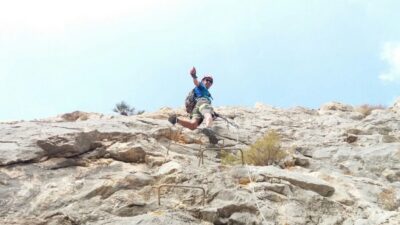
Caminito del Rey: Vía Ferrata Rappeling & Zip-Lining
Read our review →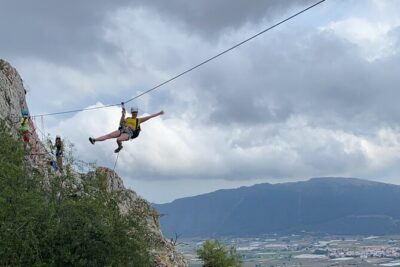
Zipline lists with this tour